



Turnkey Wire Chopping Systems You Actually Want to Run
Turn your scrap wire into profitable copper chops efficiently, reliably, and with the yields you need.
You know owning a high-quality system dramatically increases profits by separating and upgrading your feedstock.
With so many wire choppers on the market, how do you choose the right system without overpaying or getting stuck with unreliable equipment?
We build wire chopping systems based on what real recyclers ask for because we have operated what we sell for over 19 years. Here is the straightforward information you need to make an informed decision.

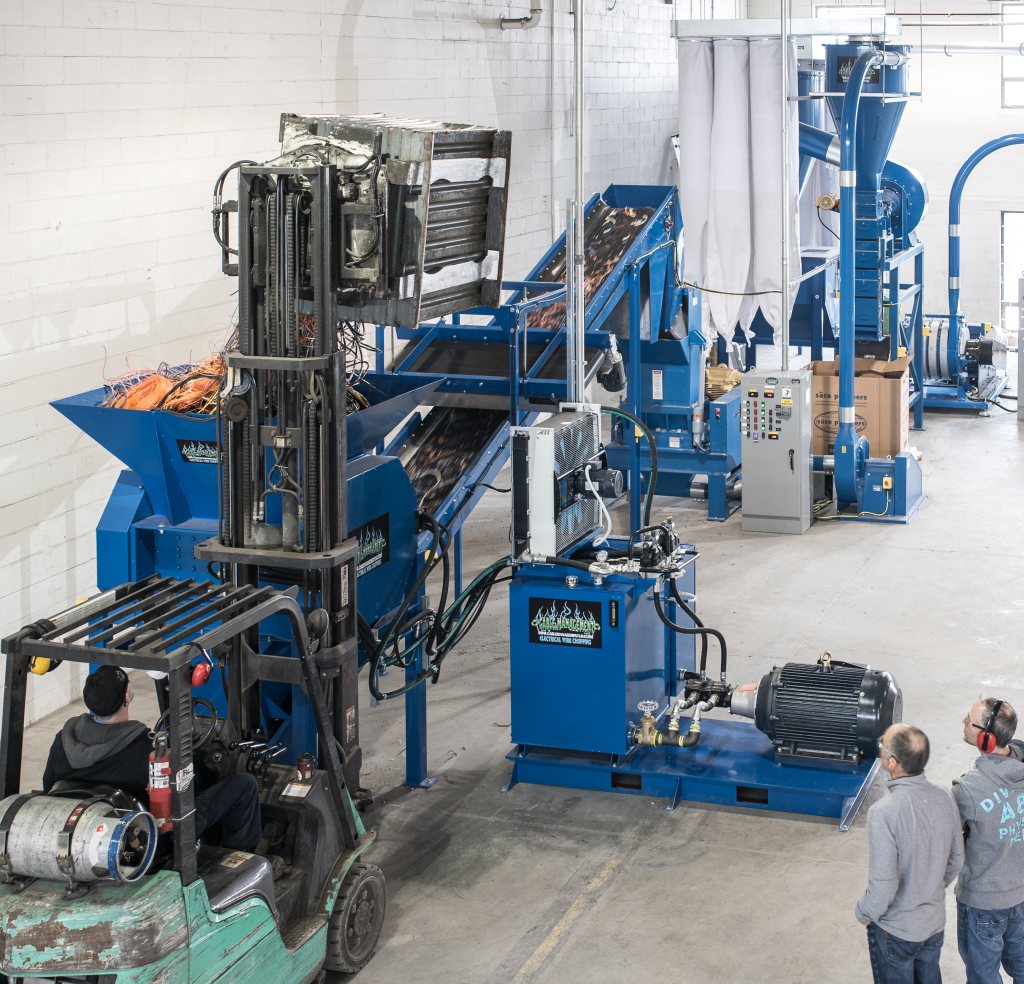
How Do Your Wire Choppers Work?
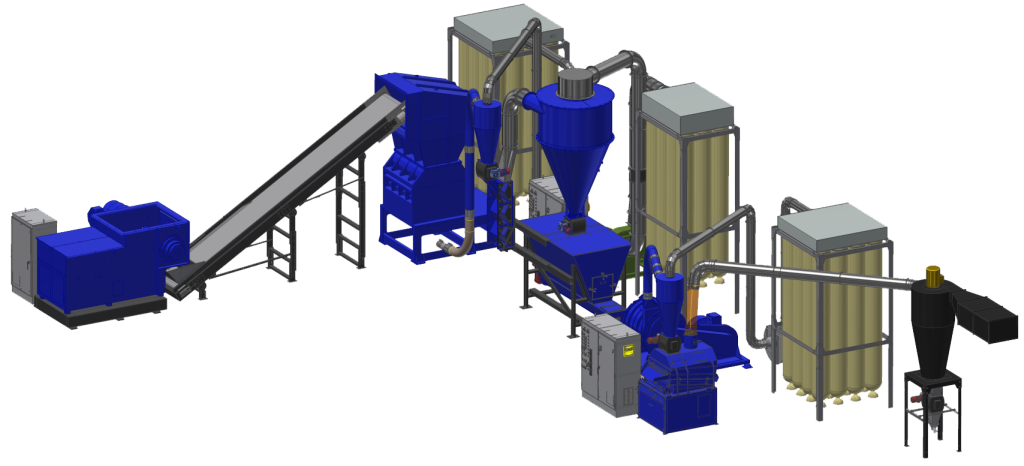
Modern wire choppers process insulated wire in three main stages:
- Pre-shredding (optional but recommended): Reduces large coils or heavy-gauge wire into manageable pieces.
- Granulation: High-powered blades chop the wire into small granules, liberating the metal from the insulation (granulators or vertical mills can be used for this step).
- Separation: Turbo mills, air tables, vibratory screens, and other equipment separate the dense copper and aluminum from lighter plastic insulation, achieving up to 99%+ purity.
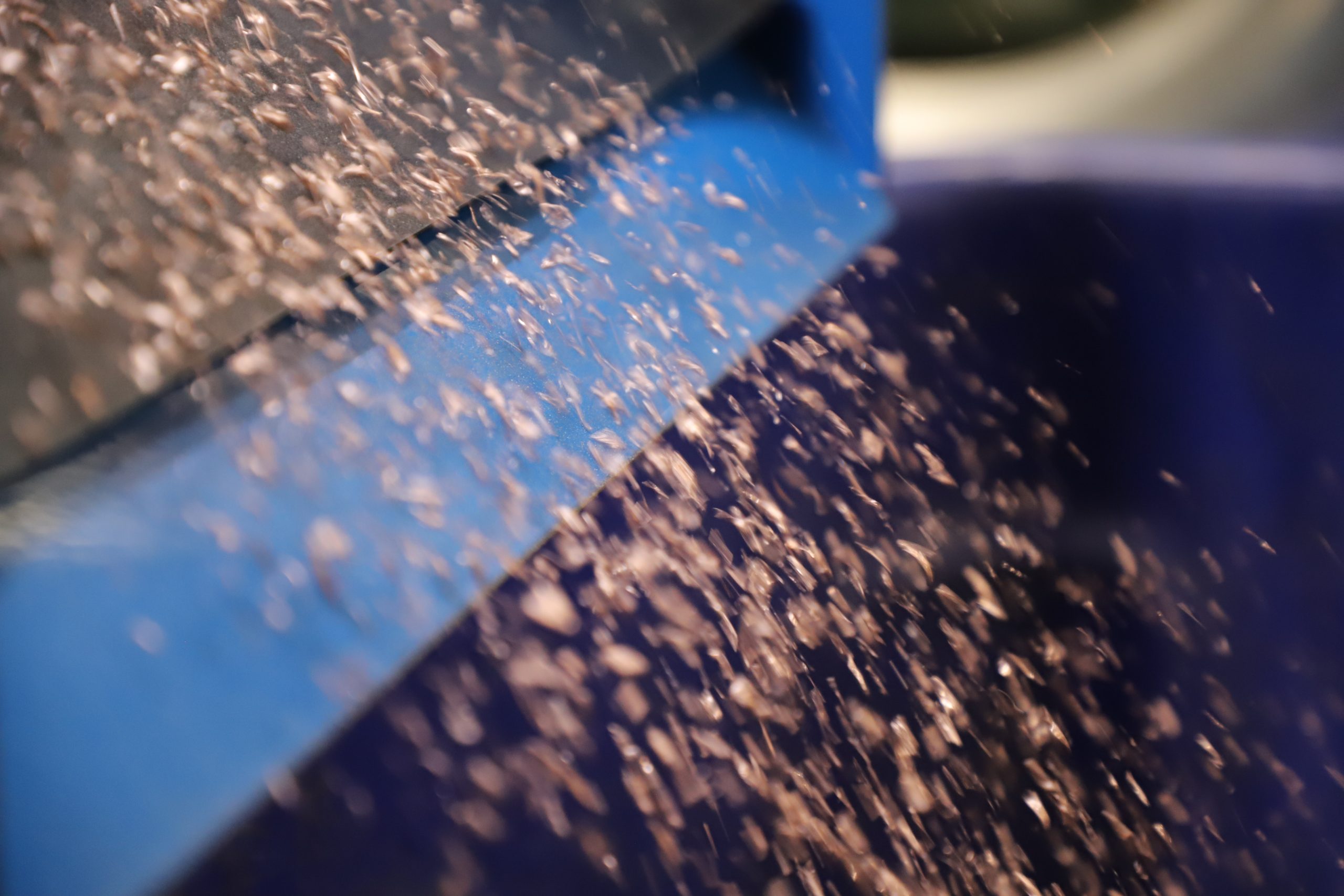
The result? Clean, mill-ready copper chops that get top market prices, alongside separated insulation for refuse-derived fuel facilities or disposal.
We make systems specialized for processing number 1 wire, number 2 wire, aluminum cable, low grade, auto harness, steel MC, aluminum MC, automotive shredder residue fines, aluminum copper radiators, and/or mixed electronic scrap wire.
What Type of Materials Can Your Wire Choppers Process?
Whether your volumes are in tons or truckloads, or you are processing more than one material, our wire choppers are configured to your specific feedstock so you surpass your needs and grow effectively.
✓ High Grade Wire Recovery
When the bulk of your processing will be focused on clean, uncontaminated number 1 insulated wire. This includes wire like THHN, Romex®, feeders, and other high-yield cables.
✓ Low Grade Wire Recovery
For when you are going to be handling primarily low-yield wire or various types of plated copper, aiming at recovery from telco, hair wire, Christmas lights, steel BX/MC, and beyond.
✓ Mixed ICW Recovery
You have a mixed bag. There is a range of different materials you get in and are looking to separate the non-ferrous from each. When your volumes are consistent but the wire type may not be.
✓ Non-Ferrous Auto Recovery
Whether it takes the shape of radiators, auto harness wire, auto shredder residue, or copper-bearing motors, you are focused on liberating non-ferrous from ferrous.
✓ Aluminum Wire Recovery
Your main source of incoming cable is insulated aluminum wire or ACSR, and you want to remove the insulation or steel.
✓ Custom Recovery Solutions
Your specification needs are stringent, your materials are complex, and your volumes are high. Standard solutions are not an option; you are looking for something tailor-made for your operation.
How Much Does a Turnkey Wire Chopping System Really Cost in 2026?
Please note that all prices are to be taken as an estimated range as each recycling system has many configurations, features, options, and other variables that influence price.
For compact systems (400–1,000 lbs/hr), expect to see prices around the $70,000 to $110,000 range.1 These lines can handle a max wire diameter up to 4″.
For mid-range lines (1,000–2,000 lbs/hr), expect to see prices around the $120,000 to $300,000 range.1 These systems can handle a max wire diameter up to 4″ to 6″.
And for high-volume industrial setups (2,000–4,000+ lbs/hr), expect to see prices around $310,000 to $950,000+1, which can handle a max wire diameter up to 6″.
Prices depend on:
- Feedstock material
- Recovery rate of feedstock
- Throughput needs
- Recommended components (pre-shredders, magnets, turbo mills, screeners, dust collection, etc.)
- System customization for your specific wire mix
It may cost more not to buy a wire chopper if your volumes can justify it. Many recyclers get 30–50% less for their insulated wire than they could from clean chops.2 Depending mostly on feedstock and volume, a mid-sized system for number 1 wire often pays for itself in 12 to 24 months by upgrading your insulated wire to clean copper chops.
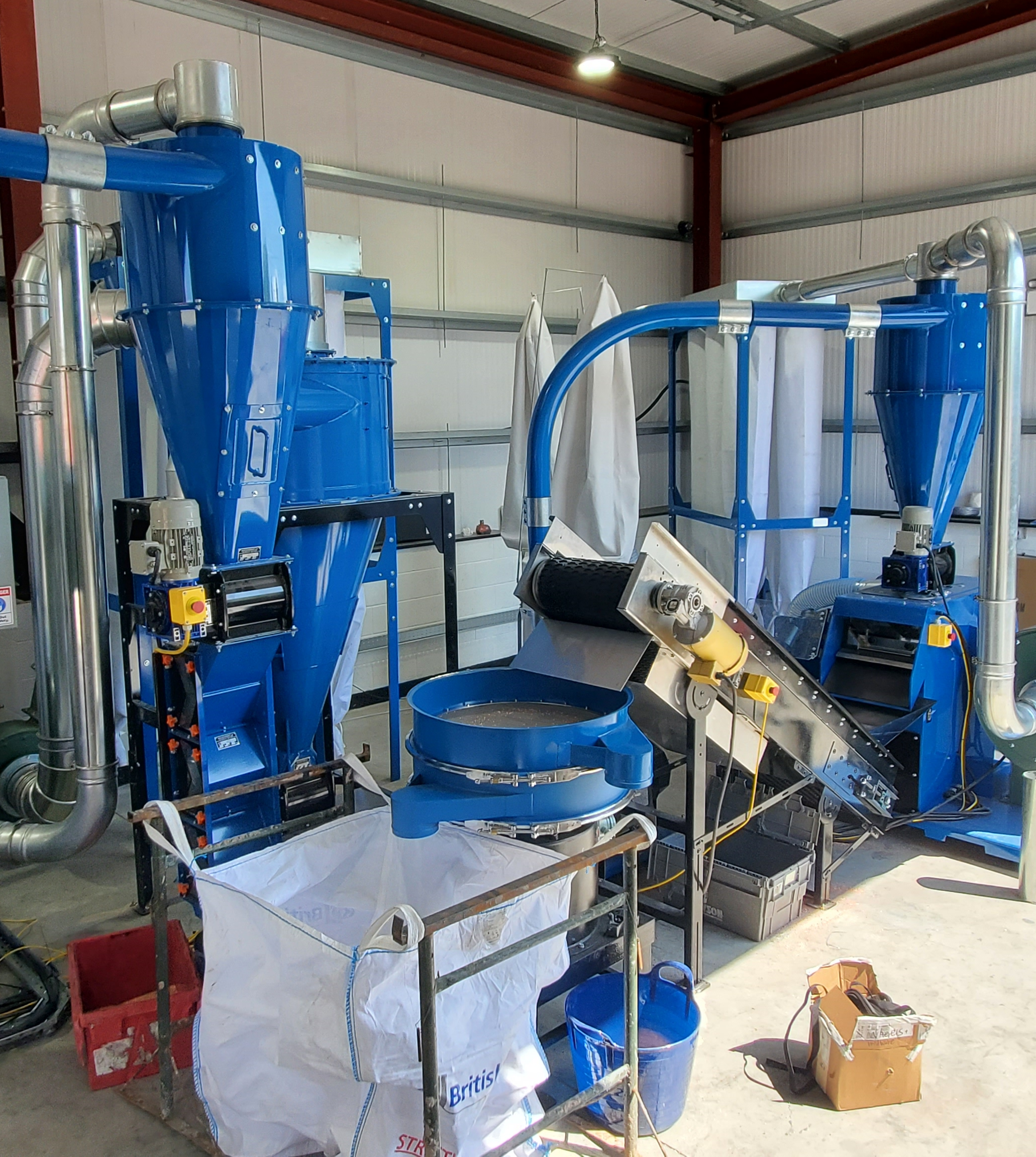
What Are the Best Wire Chopping Machines vs. the Worst?
Not all wire choppers are created equal. Here is a comparison, running number 1 wire:
| Feature | Premium Systems (Like Ours) | Budget / Imported Systems |
| Separation Rate | 99%+ clean copper | 95–97% (more contamination = less value) |
| Upfront Cost | Higher | Much lower |
| Build Quality | Turnkey, heavy-duty US and/or European components, minimal downtime | Thinner blades and screens, frequent breakdowns |
| Throughput Consistency | Handles mixed and/or jacketed wire without jamming | Struggles with armored or fine wire |
| Maintenance | Easy blade access, long-lasting parts | Hard-to-source spares (although cheaper if available) |
| Support | Full training, US-based service, warranties | Limited or overseas support |
We do not sell the cheapest machines because they cost more in the long run. Instead, we provide proven, modular, turnkey designs that scale with your business, with 100% US-based support and service.
When Does It Make Sense to Buy a Wire Chopper?
For our systems and their throughputs, we generally see that having a volume around 1,000 lbs (450 kg) of wire or more per day (20,000 lbs / 9,100 kg per month) justifies looking into a wire chopper.3
Is a Wire Chopping Line Profitable for My Operation?
Yes, if you process enough volume. Note that higher grade wire requires less processing equipment while lower grade wire requires more equipment. Feedstock and volume are two of the largest factors effecting whether wire chopping is worth investing in.
Break-even example:
Let’s say COMEX copper is $5.80. With a spread of $0.50, we get $5.30 (5.80 – 0.50 = 5.30). $5.30 is the price mills would pay for number 1 clean copper chops, in this example.
You are processing THHN, which is about 80% recovery.4
After chopping, your THHN is worth $4.24 (5.30 x 0.80 = 4.24).
Subtract what you can get paid for the wire as is from the price that you come up with above. For example, $4.24 – $3.80 = $0.44.
A system recovering an extra $0.44/lb on 40,000 lbs/month generates over $200,000/year (0.44 x 40,000 x 12 = 211,200) in additional revenue before expenses, downtime for maintenance, etc.5
Factors that boost profitability:
- Consistent wire supply
- Proper pre-sorting
- Selling clean chops to a broker, mill, or refinery
We will run a free ROI analysis based on your current volumes and wire types.
Common Problems with Wire Chopping (and How We Solve Them)
- Jamming on armored / tangled wire → Our optional pre-shredders and magnetic removal prevent most downstream issues.6
- Dust and noise → Integrated dust collection keeps your facility clean and compliant.6
- Blade wear → High-grade blades last longer; we stock replacements in the US for fast turnaround.7
- Low recovery on fine wire → Add-on turbo mills achieve finer granulation for maximum yield.
Why Choose Cable Management’s Wire Chopping Equipment?
- Proven performance → Over 200 turnkey systems commissioned with decades of recycling expertise. See our commissioned systems running production on our YouTube channel here.
- Modular design → Start small and add on machines as your business grows, in tandem with our equipment buyback program.
- Full, US-based support → One-on-one design, on-site installation, operator training, and ongoing service.
- Eco-friendly → Mechanical process with no chemical use or burn-off.
Ready to Stop Leaving Money in Your Insulated Wire?
Contact us today for a custom quote, free facility assessment, or to see a system near you. We will answer every question openly because when you succeed, we succeed.
Call +1 (860) 670-1890 or talk to one of our engineers through the button below to get started.
Get Your Wire Chopper in 3 Easy Steps
Determine the right size system and solutions to get your recycling operation to the next level.

Fill out our Talk to an Engineer form
Tell us about your existing equipment, your pain points, the materials you plan to process, your current volumes, and other needs you are looking for in your line.

Evaluate your options with an expert
One of our professionals will reach out to you to connect and conduct a thorough assessment, reviewing all potential solutions with you.

Choose the right fit for fou
Merge your experience with ours so you can get the best outcome, configuration, and decision made for your unique operation.
Stop Making Less From Your Wire
Getting full value for your materials does not have to be difficult. Our team is here to help provide an individualized wire chopping solution tailored to your current and future processing needs. We are dedicated to getting you the right system and available options for your business.
- How Much Does a Wire Chopper Actually Cost in 2026?
 Finding information on wire choppers is easy but finding their actual price can be a hassle – see what wire chopper prices are going for this year.
 - How to Avoid Downtime in Your Wire Chopping Operations
 While you can never avoid downtime entirely, there are certain steps you can take while chopping to minimize it – find the best ways here.
 - Are You Making These 4 Common Mistakes in Wire Chopping?
 Frequent, avoidable mistakes in industrial operations occur all the time and wire chopping is no exception – see the most common ones here.
 - What Size Wire Chopping System Do You Need?
 Figuring out what size wire chopper you need is a vital step in a solid operation with infeed material and throughput topping the list.
 - The Difference Between Granulators, Vertical Mills, and Turbo Mills
 Granulators, vertical mills, and turbo mills are each pieces of recycling equipment that can serve different purposes – see what they are here.
 - Should You Get Into Wire Chopping? (Part 2)
 Sometimes an equation to plug your own numbers into can be the best way to see if a new operation makes sense – check out the one we use here.
 - Should You Get Into Wire Chopping? (Part 1)
 Getting into wire chopping has many variables that you should consider before diving right in – see the most important ones here.